

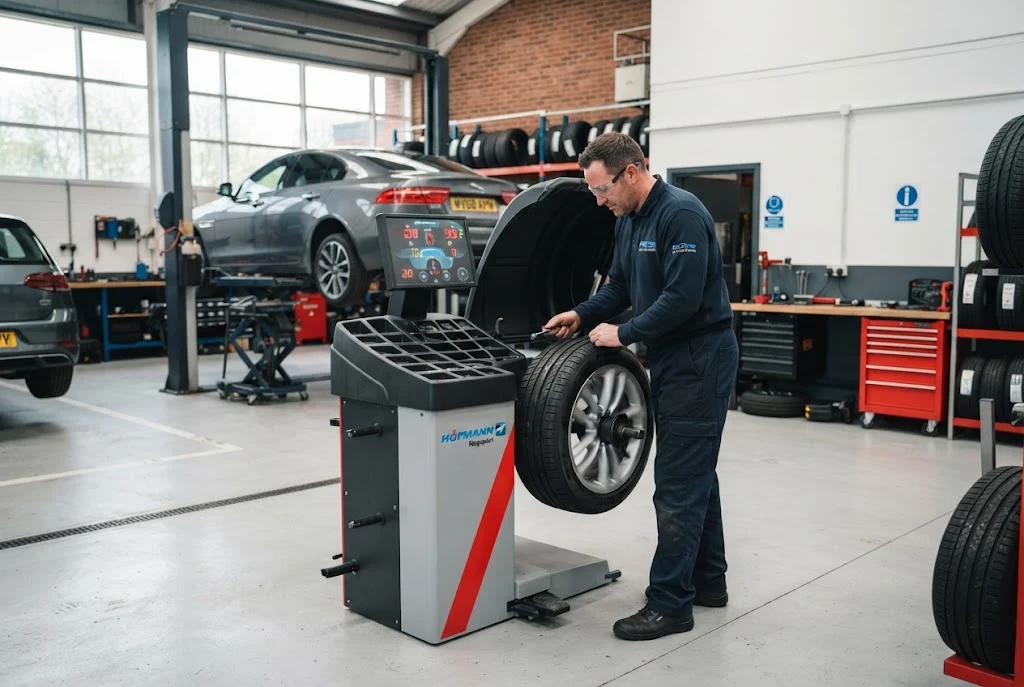
Reliable tyre services are an essential part of safe and efficient vehicle ownership in the UK. From routine tyre fitting and balancing to puncture repairs, replacement and mobile assistance, the right tyre service can help keep a vehicle roadworthy while reducing avoidable disruption.
Tyres are also an important part of everyday vehicle maintenance. UK drivers are responsible for ensuring their vehicles remain safe to drive, including checking that tyres have the correct tread depth and are free from cuts and other defects. For cars, light vans and light trailers, the legal minimum tread depth is 1.6mm across the central three-quarters of the tread and around the entire circumference. GOV.UK guidance on vehicle safety provides further information for motorists.
What Do Tyre Services Include?
Professional tyre services cover several tasks designed to maintain the condition, fitment and performance of a vehicle’s tyres. While some drivers associate tyre services only with buying new tyres, the overall process can include inspection, fitting, inflation, balancing, repair and replacement.
A typical tyre service may involve checking the existing tyres for visible damage, measuring tread depth, examining wear patterns, confirming tyre pressures and determining whether a repair or replacement is appropriate.
The exact service required depends on the condition of the tyre, the vehicle, the type of damage and the manufacturer’s requirements. A professional assessment is particularly useful when a tyre has suffered a puncture, developed uneven wear or shows signs of structural damage.
Tyre Fitting and Replacement
Tyre fitting involves removing an existing tyre from the wheel and correctly installing another tyre. The process needs to be handled carefully because incorrect seating, unsuitable tyre specifications or poor inflation can create safety and performance problems.
When fitting replacement tyres, technicians should check that the tyre specification is suitable for the vehicle. Size, load rating and other markings can matter, so drivers should not select a replacement based solely on appearance or price.
Tyre replacement becomes necessary when a tyre has reached an unsuitable level of wear or has damage that cannot safely be repaired. Bulges, serious cuts, exposed cords and structural deterioration can be reasons for replacement rather than repair.
For vehicles subject to an MOT, tyre condition, security, size and type and tread depth are among the areas inspected. The current MOT inspection guidance also includes requirements relating to tyre fitment and tyre pressure monitoring systems on applicable vehicles. The official MOT inspection guidance explains these requirements in detail.
Tyre Repairs: When Is Repair Appropriate?
Tyre repairs can sometimes provide a practical alternative to replacement, but not every damaged tyre should be repaired. The location, size and severity of the damage all matter.
A professional inspection should be carried out before deciding that a punctured tyre is suitable for repair. Damage to the tread area may be treated differently from damage to a sidewall or structural components. If the tyre has suffered significant structural damage, replacement may be the safer option.
Drivers should also avoid relying on a temporary solution when a tyre requires proper professional attention. A tyre that repeatedly loses pressure, shows a visible bulge or develops unusual wear should be assessed rather than simply reinflated.
Why Tyre Balancing Matters
Tyre balancing is another important part of tyre maintenance, particularly after fitting a new tyre or when a wheel and tyre assembly develops an imbalance.
When a wheel is correctly balanced, its weight is distributed evenly around the rotation point. An imbalance can contribute to vibration, particularly at certain speeds. It can also affect driving comfort and may contribute to uneven tyre wear.
Balancing is therefore best considered as part of the wider tyre workflow rather than as an optional add-on after every tyre-related job. Technicians can assess whether balancing is required based on the condition of the wheel and tyre assembly and the symptoms reported by the driver.
Mobile Tyre Fitting for Greater Convenience
Mobile tyre fitting has become a useful option for drivers who cannot easily visit a traditional workshop. Instead of taking the vehicle to a fixed location, a mobile technician can attend an agreed location where the required tyre work can be carried out, provided the service and conditions are suitable.
This approach can be particularly convenient for busy motorists, business fleets and drivers dealing with tyre problems away from home. It can reduce the time spent arranging transport or waiting for a workshop appointment.
However, mobile tyre fitting does not remove the need for proper assessment and safe working practices. The technician still needs appropriate equipment, a suitable working environment and the correct tyre specification for the vehicle.
Building an Efficient Tyre Workflow
For garages and tyre businesses, an organised tyre workflow can improve consistency and customer service. A clear process helps staff identify what needs to happen from the initial booking through to final handover.
1. Record the Customer Request
The process should begin by recording the customer’s reason for contacting the business. This could be a puncture, worn tread, vibration, seasonal tyre change, replacement requirement or routine inspection.
2. Confirm Vehicle and Tyre Details
Vehicle registration, tyre size and other relevant specifications should be confirmed before work begins. Accurate information helps the business identify the correct product and avoid unnecessary delays.
3. Inspect the Existing Tyres
A visual and physical inspection can identify tread wear, cuts, bulges, pressure issues and other defects. The inspection should determine whether the tyre can remain in service, requires repair or needs replacement.
4. Complete the Required Work
Once the appropriate service has been agreed, the technician can complete the fitting, repair, replacement or balancing work. Any additional issue discovered during the process should be communicated clearly before unnecessary extra work is carried out.
5. Complete Final Checks
Before returning the vehicle, the technician should complete appropriate checks and confirm that the work has been completed correctly. Tyre pressure, fitment and general condition should be considered as part of the final quality-control process.
How Tyre Services Support Vehicle Maintenance
Tyre maintenance does not operate separately from the rest of a vehicle’s servicing requirements. Tyres interact with steering, suspension, braking and road contact, so unusual tyre wear can sometimes provide an early indication of another mechanical issue.
For example, uneven wear may justify checking wheel alignment or suspension components rather than simply replacing the affected tyre. Similarly, repeated pressure loss may require investigation rather than repeated inflation.
This is why good tyre services focus on identifying the underlying issue instead of treating every tyre problem as a straightforward replacement job.
When Should Drivers Seek Tyre Services?
Drivers should not wait until a tyre becomes completely unusable before arranging professional assistance. A service may be appropriate when tread is approaching the legal limit, a tyre repeatedly loses pressure, visible damage appears or unusual vibration and handling problems develop.
Before longer journeys, checking tyre condition and pressure can also help identify obvious problems early. GOV.UK advises drivers to check tyres as part of regular vehicle safety checks and confirms that cars, light vans and light trailers require at least 1.6mm of tread depth across the central three-quarters of the tread and around the full circumference.
For businesses operating several vehicles, planned tyre maintenance can make the process more predictable. Combining tyre checks with broader vehicle inspection procedures can help create a more consistent maintenance record.
Choosing the Right Tyre Service Provider
Price is naturally an important consideration, but it should not be the only factor when choosing a tyre service provider. Drivers should consider whether the provider can supply the correct tyre specification, explain the recommended work clearly and complete fitting or repairs using appropriate equipment.
For mobile services, customers should also confirm where the technician can safely carry out the work and whether the requested service is available at the chosen location.
Clear communication is particularly valuable when a technician discovers additional damage. A professional service should explain the issue and distinguish between essential work and optional maintenance rather than presenting every recommendation as an immediate requirement.
Tyre Services and Better Automotive Operations
Efficient tyre services are about more than replacing worn rubber. For drivers, they provide an important part of vehicle safety and maintenance. For automotive businesses, they also involve stock management, scheduling, technician capacity, customer communication and quality control.
As automotive businesses become increasingly digital, tyre operations can connect with wider systems covering vehicle inspections, service records, customer payments and online bookings. A well-structured process can make it easier to track jobs from the initial enquiry through to completion.
Tyre services therefore sit within a much broader automotive service ecosystem. Businesses that organise each stage of the workflow can improve consistency while giving customers clearer information about what their vehicles need.
Final Thoughts on Tyre Services
Professional tyre services cover far more than fitting a new set of tyres. Tyre fitting, replacement, repairs, balancing and mobile fitting each address different maintenance requirements, while a structured tyre workflow helps automotive businesses deliver these services consistently.
For UK drivers, regular tyre checks remain an important part of responsible vehicle ownership. When damage, unusual wear or persistent pressure loss appears, getting the tyre assessed promptly can help prevent a small issue from becoming a larger safety or maintenance problem.
For automotive businesses, combining reliable tyre processes with broader inspection and service workflows can create a more efficient customer experience and stronger operational standards.
