

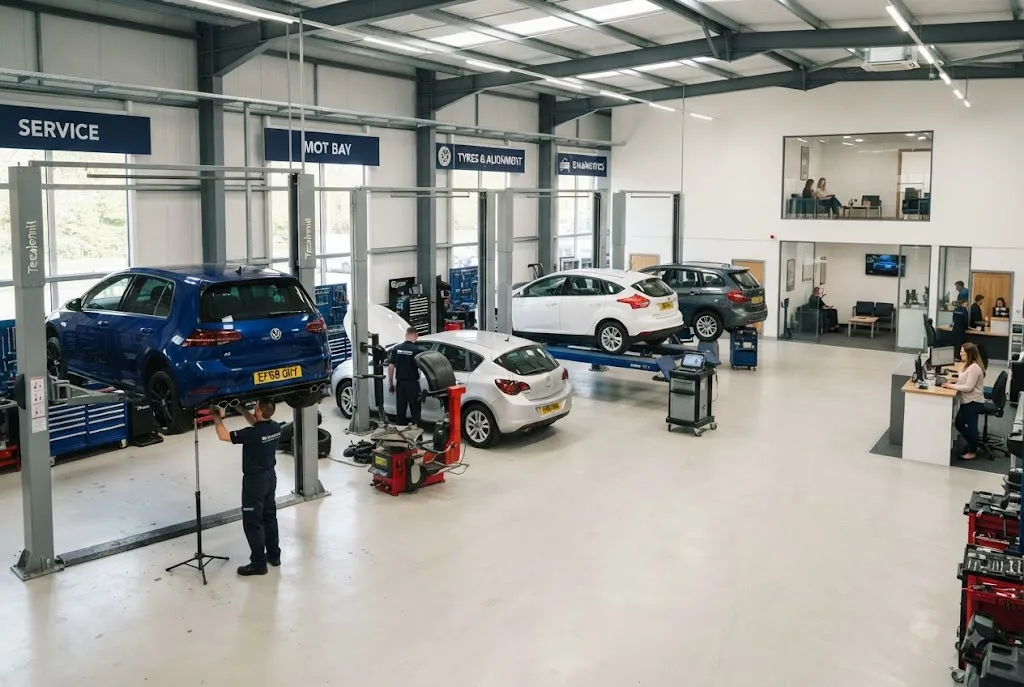
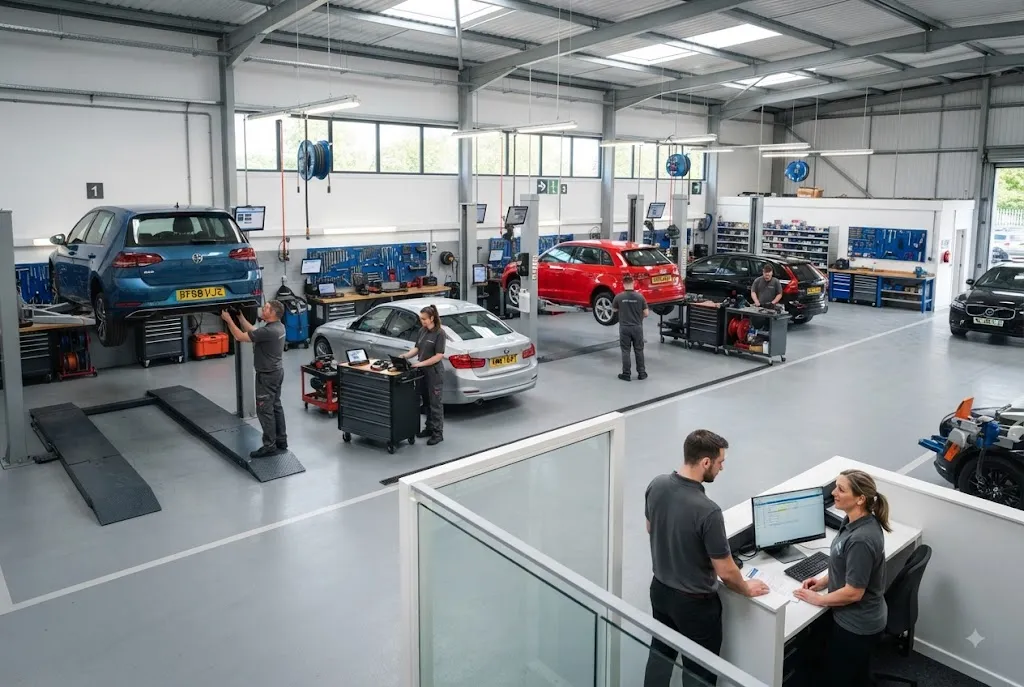
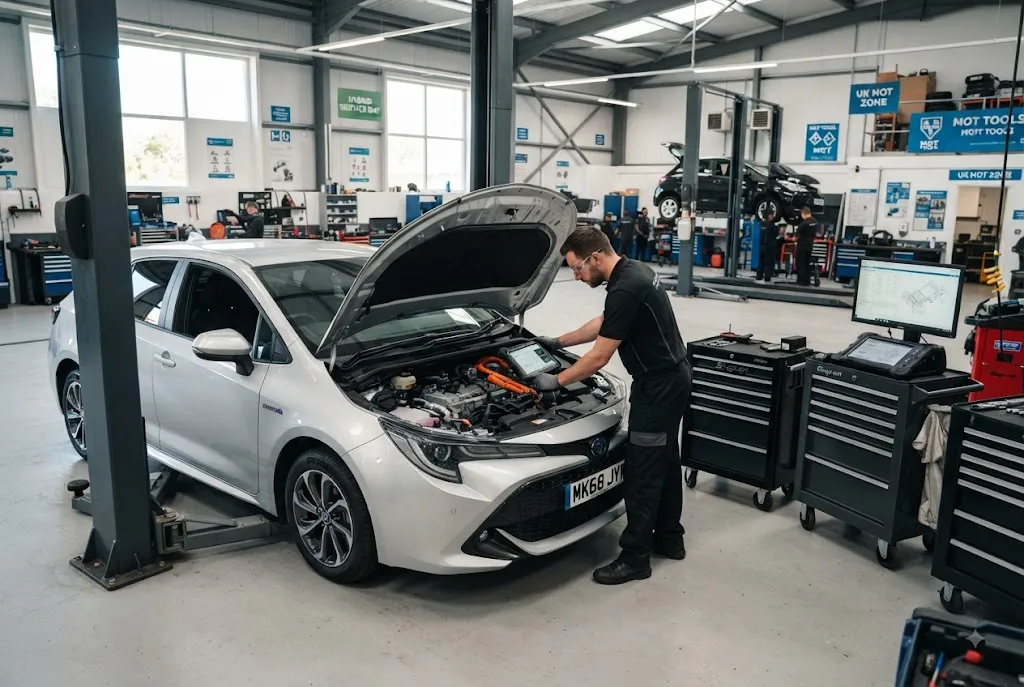
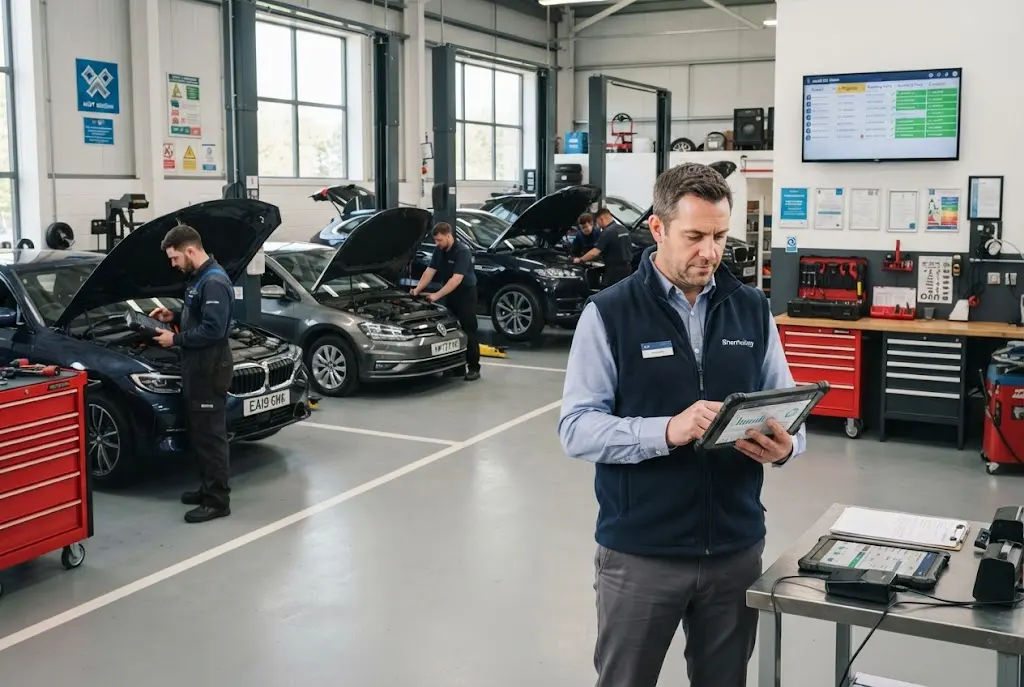
Automotive operations bring together the people, processes, technology and resources required to deliver reliable vehicle services. For garages, mobile mechanics and automotive service businesses, operational performance affects everything from appointment scheduling and technician productivity to customer communication, repair quality and profitability.
A workshop can have experienced technicians and strong demand yet still lose valuable time through inefficient processes. Vehicles may wait for parts, technicians may spend too long looking for information, appointments may be poorly scheduled or customer approvals may delay completed work. Improving automotive operations means identifying these friction points and building practical systems around them.
The goal is not simply to make employees work faster. It is to create an operating environment where people have the right information, resources and processes to complete quality work efficiently.
What Are Automotive Operations?
Automotive operations cover the activities that allow an automotive business to serve customers consistently. In a workshop, this can include booking, vehicle reception, inspection, diagnosis, parts management, repair, quality checks, invoicing and customer communication.
For mobile businesses, the operating model also includes technician dispatch, travel planning, vehicle equipment and on-site service delivery.
Each activity affects the others. A poorly planned booking can create problems for scheduling. A delayed part can reduce technician productivity. An incomplete inspection report can delay customer approval. A slow approval process can then affect the next job.
Effective automotive operations therefore require a connected view of the entire service journey.
Why Service Optimisation Matters
Service optimisation focuses on improving how automotive services are planned and delivered. The first step is understanding the current process rather than immediately introducing new software or adding more staff.
Managers can map the customer journey from initial booking through to vehicle collection or completion of an on-site job. At each stage, they can identify delays, duplicated tasks, unnecessary handovers and missing information.
For example, if technicians regularly wait for service advisors to confirm additional work, the issue may be a communication process rather than technician productivity. Fixing that process can improve the entire workflow without increasing headcount.
Build Better Automotive Operational Systems
Operational systems provide repeatable ways of completing common tasks. They reduce the amount of knowledge that exists only in individual employees’ heads and make processes easier to manage across the team.
A workshop might create defined systems for:
- Customer booking and vehicle check-in.
- Technician job allocation.
- Vehicle inspection.
- Parts ordering and availability checks.
- Customer approval of additional work.
- Repair documentation.
- Quality control.
- Vehicle collection and handover.
- Invoice completion.
- Post-service communication.
Each system should have a clear purpose, responsible owner and expected outcome. The process should be detailed enough to create consistency without becoming unnecessarily complicated.
Improve Workshop Workflow Step by Step
Workflow improvement is often more effective when businesses address one bottleneck at a time. Trying to redesign every workshop process simultaneously can create confusion and make it difficult to determine which change produced a result.
Managers can start by identifying the points where work frequently stops or waits. Common examples include parts delays, incomplete customer information, vehicle movement, diagnostic bottlenecks and approval delays.
Once a bottleneck has been identified, the team can document the current process and consider what causes the delay. A revised process can then be tested and measured.
This creates a practical improvement cycle:
- Identify the operational problem.
- Document the current process.
- Find the underlying cause.
- Design a practical improvement.
- Test the change.
- Measure the outcome.
- Standardise the improvement if it works.
Use Productivity Frameworks Carefully
Productivity frameworks can help managers understand how time and resources are being used. However, productivity should not be reduced to a single target.
A technician who spends additional time diagnosing a difficult fault may appear less productive than someone completing several straightforward maintenance jobs. That does not necessarily mean the diagnostic technician is performing poorly.
Useful productivity analysis should therefore consider job complexity, available hours, productive hours, quality and repeat work.
Managers can monitor measures such as billed labour hours, technician utilisation, average job duration and first-time completion rates. These metrics become more meaningful when reviewed together.
Strengthen Automotive Business Processes
Business processes should connect customer-facing activities with workshop operations. A customer may only see the booking, quotation and final invoice, but many internal steps take place between those points.
For example, a service booking may require vehicle information to be captured correctly, the appropriate technician to be assigned, required parts to be identified and the estimated labour time to be reserved.
If one of these steps is missed, the problem may only become visible when the vehicle reaches the workshop.
Standardising important processes helps reduce these avoidable errors. It also makes training easier because employees have a defined process to follow.
Apply Lean Operations Principles
Lean operations focus on reducing activities that consume resources without creating useful value for the customer or business.
In an automotive environment, waste can appear in several forms. Technicians may walk repeatedly to collect tools, vehicles may be moved unnecessarily, staff may enter the same information into multiple systems or customers may wait for approvals that could have been handled more efficiently.
Not every non-productive activity can be eliminated. Some administrative, safety and quality-control tasks are necessary. The objective is to distinguish necessary work from avoidable friction.
Simple changes can sometimes have a significant operational effect. Organising commonly used tools, improving parts staging or introducing clearer job-status procedures can reduce wasted movement and waiting time.
Improve Service Efficiency
Service efficiency depends on how effectively a business converts available resources into completed, quality work.
For a workshop, this means considering technician capacity, equipment, bays, parts and customer demand together. A workshop may have spare technician capacity but limited bay availability. Another may have enough bays but insufficient diagnostic capability during peak periods.
Managers should therefore identify the actual constraint before attempting to increase overall workload.
Scheduling can also influence efficiency. Grouping similar work or allocating jobs according to technician skills can reduce unnecessary transitions between tasks.
Connect Inspections With Operational Performance
Vehicle inspections are an important part of the operational workflow because they can identify additional work and provide a documented record of vehicle condition.
A structured auto inspection services process can help technicians follow consistent inspection procedures and communicate findings more clearly.
Inspection data can also reveal operational patterns. If certain problems are repeatedly identified after a particular service type, management may need to review how that service is being performed or communicated.
The key is to use inspection information to improve service quality and customer communication rather than simply increasing the number of recommended repairs.
Connect Operations With Garage Management
Garage management provides the leadership layer that keeps operational processes aligned. Managers need visibility into current workload, technician availability, customer commitments and workshop performance.
Regular operational reviews can help identify emerging problems before they become serious. A daily review might examine today’s workload and delayed jobs, while a weekly review could look at productivity, quality and capacity trends.
Monthly reviews can then examine broader financial and operational performance.
This layered approach gives managers both immediate visibility and a longer-term understanding of how the business is performing.
Use Performance Management to Support Improvement
Performance management should connect individual responsibilities with wider business objectives.
Technicians need clear expectations around technical quality, documentation and productivity. Service advisors need clarity around customer communication, approvals and job coordination. Managers need responsibility for capacity, quality, customer experience and financial performance.
Performance discussions should also consider the operating environment. If an employee repeatedly misses productivity targets because parts are unavailable, the solution may involve improving parts management rather than simply changing the employee’s target.
This distinction is important because operational performance is often influenced by the system surrounding an individual.
Make Technology Support the Process
Digital tools can improve automotive operations, but technology should support a clearly defined process rather than become the process itself.
Useful systems can help manage bookings, job cards, digital inspections, technician schedules, customer approvals, parts information and performance reporting.
Before implementing a new platform, managers should understand what problem it is intended to solve. Adding software to an inefficient workflow may simply move the same inefficiency into a digital environment.
Technology becomes more valuable when the underlying workflow is already understood and the system is configured around the business’s actual requirements.
Measure the Right Operational KPIs
Automotive businesses need practical measurements that reveal whether operational changes are producing meaningful improvements.
Depending on the business model, useful KPIs can include:
- Technician utilisation.
- Productive labour hours.
- Average repair order value.
- First-time completion rate.
- Repeat repair or comeback rate.
- Average vehicle turnaround time.
- Customer approval rate.
- Parts-related delays.
- Appointment cancellation rate.
- Revenue per productive hour.
KPIs should be reviewed in context. A reduction in turnaround time is not necessarily an improvement if it results in more quality problems or repeat visits.
Link Automotive Operations With Pricing
Operational efficiency also affects pricing decisions. A workshop needs to understand how much technician time, parts and overhead are required to deliver different services.
A structured car service cost model can help connect operational resources with pricing decisions.
If a service consistently takes longer than estimated, management can investigate why. The cause could be inaccurate job times, inadequate equipment, inefficient workflow or a training requirement.
This approach is more useful than simply increasing prices whenever profitability falls because it addresses the operational cause as well as the commercial result.
Plan for Continuous Operational Improvement
Operational excellence is not achieved through a single project. Automotive businesses operate in changing environments, with new vehicle technologies, changing customer expectations, different staffing requirements and evolving service models.
Managers should therefore establish a continuous review process. Teams can regularly identify one or two operational improvements, test them and measure the results.
Successful changes can then become part of the standard operating process. This prevents improvements from depending on one enthusiastic employee and makes them easier to maintain as the business grows.
Final Thoughts on Automotive Operations
Automotive operations provide the structure behind efficient and consistent vehicle services. Strong operations connect people, processes, technology, scheduling, inspections, pricing and performance management into one coordinated system.
The most effective improvements often begin with simple questions: Where is work waiting? Where is information being lost? Which tasks are duplicated? What prevents technicians from being productive? Where are customers waiting for decisions?
Answering those questions gives managers a practical starting point for improving workflow and service efficiency.
By combining clear business processes, sensible productivity frameworks, lean operational principles and meaningful performance management, automotive businesses can create systems that support both employees and customers.
The objective is not to make every process more complicated. It is to remove unnecessary friction, make responsibilities clear and ensure that valuable technician time is spent on work that genuinely contributes to customer service and business performance.
For UK automotive businesses, operational improvements should also be considered alongside applicable workplace, vehicle and consumer requirements. GOV.UK automotive industry guidance provides access to relevant government information for businesses operating within the UK automotive sector.