

Effective automotive operations are at the heart of a successful modern garage or workshop network. From booking vehicles and allocating technicians to managing parts, completing repairs and checking finished work, every stage affects productivity, service quality and customer satisfaction. When these processes are measured and improved systematically, workshops can increase capacity without relying solely on additional staff or larger premises.
For independent garages and larger networks alike, operational excellence means creating a consistent process that allows technicians and support teams to work efficiently while maintaining high standards. It also means using reliable performance data to identify bottlenecks, understand variations between sites and make better decisions.
What Are Automotive Operations?
Automotive operations cover the processes required to deliver vehicle servicing, maintenance, diagnostics, repairs and related workshop services. The term extends beyond the technician’s work on a vehicle. It includes everything that happens before, during and after the workshop job.
A typical operational journey may begin with an online or telephone booking. The vehicle then arrives for reception and inspection, followed by diagnosis, parts identification, repair or servicing, quality checks, invoicing and customer handover.
Each stage creates opportunities for delay or improvement. A workshop can have highly skilled technicians but still perform poorly if bookings are badly scheduled, parts arrive late or vehicles wait unnecessarily between processes.
Why Automotive Operations Matter
Workshop capacity is a valuable resource. Every unused technician hour, delayed vehicle or unnecessary movement through the workshop can reduce the number of jobs a business can complete.
Strong operations help businesses make better use of the resources they already have. Instead of simply increasing workloads, managers can examine how work flows through the workshop and remove avoidable friction.
This is particularly important for multi-site businesses. Consistent processes allow managers to compare branches more effectively and identify operational practices that can be replicated elsewhere. That approach supports the broader goal of benchmarking garage chains and understanding differences in service performance.
Key Areas of Automotive Operations
Operational performance can be divided into several connected areas. Treating them separately makes measurement easier, but managers should remember that changes in one area can affect another.
Workshop Scheduling
Scheduling determines how effectively available workshop capacity is used. A good schedule should account for technician skills, job duration, equipment requirements, parts availability and promised completion times.
Overbooking may create pressure on technicians and increase customer waiting times. Underbooking, meanwhile, can leave productive capacity unused. The objective is therefore to create a balanced schedule that reflects realistic workshop capability.
Vehicle Reception and Inspection
The initial vehicle handover is an important operational stage. Accurate information collected at reception helps technicians understand the customer’s concerns and allows the workshop to identify additional issues during inspection.
Clear inspection procedures can also reduce misunderstandings. Photographs, digital inspection reports and transparent explanations can make it easier for customers to understand recommended work.
Technician Allocation
Not every technician has the same experience, qualifications or diagnostic capability. Assigning jobs according to technician skills can improve both productivity and quality.
For example, a complex diagnostic job may require a technician with specialist experience, while routine maintenance work may be suitable for another member of the team. Matching skills to jobs can prevent unnecessary handovers and reduce delays.
Parts Management
Parts availability has a direct impact on workshop productivity. A vehicle occupying a bay while waiting for a component represents capacity that cannot easily be used for another job.
Effective parts processes should therefore connect inspection, estimating, ordering and workshop scheduling. Where possible, parts requirements should be identified early enough to support the planned repair time.
Quality Control
Quality control should be built into the workflow rather than treated as an afterthought. Final inspections, torque checks, diagnostic verification and road tests where appropriate can help confirm that work has been completed correctly.
A strong quality process also provides useful information for management. If a particular type of repair repeatedly requires additional work after completion, the business can investigate whether the issue relates to training, parts, procedures or job allocation.
Workshop Benchmarking and Performance Measurement
Workshop benchmarking provides a structured way to compare performance between sites, teams or periods. However, useful benchmarking requires consistent definitions.
For example, “jobs completed” can mean different things depending on the business. One workshop might count every invoice, while another counts individual repair operations. Managers need to establish common definitions before comparing results.
Benchmarking should also account for differences in service mix. A workshop specialising in routine servicing will naturally have a different workflow from one handling complex diagnostics or accident repairs.
For multi-site networks, branch-level data can be particularly valuable. A high-performing branch may reveal a scheduling process, technician allocation method or parts-management practice that can be introduced elsewhere.
Essential Operational KPIs
Operational KPIs turn workshop activity into measurable information. The exact measures should reflect the business model, but several indicators are useful across many automotive workshops.
Technician Utilisation
Technician utilisation compares productive working time with available working time. It can highlight whether workshop capacity is being used effectively.
Low utilisation may indicate weak demand, scheduling problems, excessive administrative time or workflow bottlenecks. However, managers should avoid interpreting the number in isolation because excessively high utilisation can also create quality and workload problems.
Labour Efficiency
Labour efficiency can help show how effectively technician time is converted into billable work. It is particularly useful when combined with job complexity and service type.
A workshop that consistently records strong labour efficiency while maintaining low rework can provide a useful internal benchmark for other sites.
First-Time Fix Rate
The first-time fix rate measures how often work is completed correctly without requiring additional corrective work. It is a valuable quality indicator because high productivity is less meaningful if vehicles repeatedly return for the same issue.
Managers should investigate recurring failures rather than simply treating them as individual incidents. Patterns can reveal weaknesses in diagnosis, repair procedures, parts quality or final inspection.
Vehicle Turnaround Time
Turnaround time measures how long a vehicle remains within the workshop process. Shorter turnaround can improve customer experience and increase capacity, provided the reduction does not compromise quality.
It can be useful to break turnaround into stages. For example, managers can distinguish waiting for inspection, waiting for parts, technician working time and waiting for final approval. This makes bottlenecks easier to identify.
Rework and Comebacks
Rework is a useful warning indicator. If vehicles frequently return because a repair was incomplete or unsuccessful, the workshop may be losing capacity while also damaging customer confidence.
Tracking rework by repair category, technician, parts supplier or branch can help identify recurring causes.
How Workflow Optimisation Improves Workshops
Workflow optimisation involves examining how vehicles, information, parts and people move through a workshop. The objective is to remove unnecessary waiting, duplication and movement.
A workshop might discover that technicians regularly leave their work bays to collect tools or parts. Another may find that vehicles wait for approval because estimates are not communicated promptly. These seemingly small issues can accumulate across hundreds of jobs.
Mapping the complete workshop journey can make these problems visible. Managers can then prioritise changes based on their likely effect on capacity, quality and customer experience.
Reduce Unnecessary Waiting
Waiting is often one of the easiest areas to overlook. A vehicle may be physically inside a workshop without actively receiving attention.
Separating active repair time from waiting time provides a clearer view of workshop efficiency. If waiting accounts for a significant part of the vehicle’s total visit, management can investigate the cause.
Improve Job Handover
Information should follow the vehicle throughout its workshop journey. Technicians need accurate customer concerns, inspection results, repair instructions and parts information.
Clear digital job cards can reduce repeated questions and minimise the risk of important information being lost between reception and workshop teams.
Standardise Repeatable Processes
Standardisation does not mean treating every repair as identical. Instead, it means establishing reliable procedures for repeatable activities such as vehicle check-in, inspections, diagnostic recording, parts requests and final quality checks.
Consistent processes make training easier and create more reliable performance data.
Using Productivity Benchmarks Correctly
Productivity benchmarks can help managers understand whether a workshop is performing efficiently, but targets should be realistic and relevant to the work being performed.
For example, comparing a diagnostic specialist with a technician performing routine tyre and brake work using the same productivity target would produce a distorted result. Diagnostic jobs can involve significant investigation time before any physical repair takes place.
Benchmarks should therefore be segmented by job category, technician capability, equipment requirements and workshop model wherever possible.
Good benchmarks also evolve. Changes in vehicle technology can alter job times, training requirements and equipment needs. Hybrid and electric vehicles are already changing workshop processes, which makes specialist operational planning increasingly important.
Service Quality and Customer Experience
Service quality should remain central to automotive operations. A workshop that maximises vehicle throughput but compromises communication or repair quality may create higher costs over time.
Customer communication is particularly important when a repair takes longer than expected. Prompt updates can help manage expectations and reduce frustration.
Digital vehicle inspections can also improve transparency by showing customers photographs or explanations of recommended work. When recommendations are clear, customers are better positioned to make informed decisions.
Automotive Operations in Hybrid Workshops
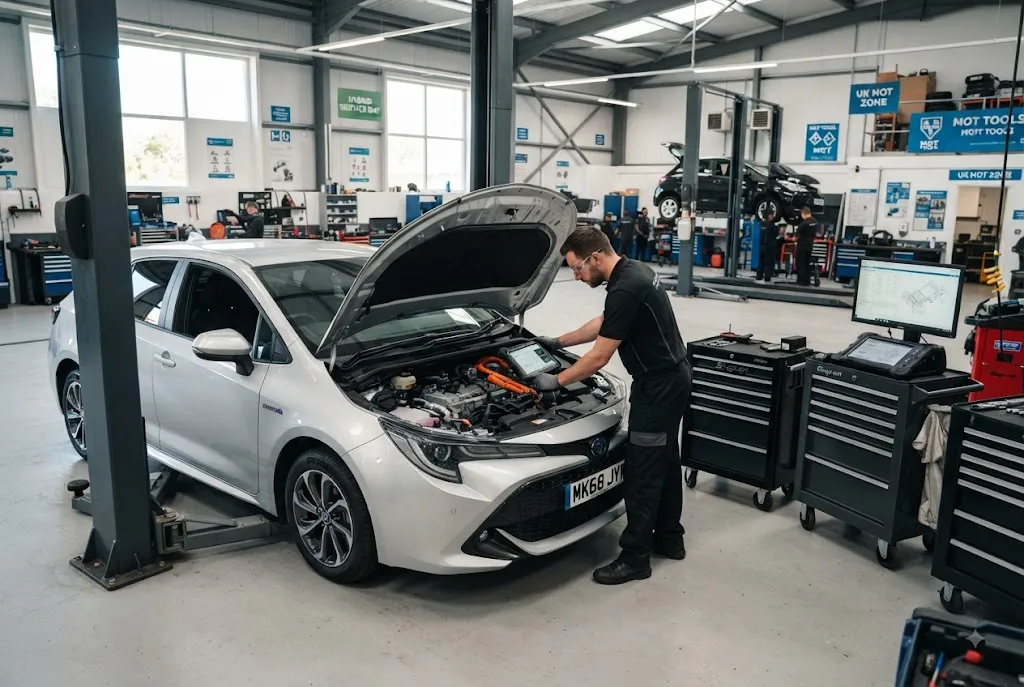
The move towards electrified vehicles is creating new operational requirements. Workshops servicing hybrid vehicles need appropriate diagnostic capability, technician knowledge and procedures for working safely around high-voltage systems.
These requirements make hybrid servicing an important consideration when developing future workshop processes. Battery management, diagnostic procedures and technician scheduling can all influence how efficiently hybrid jobs move through a workshop.
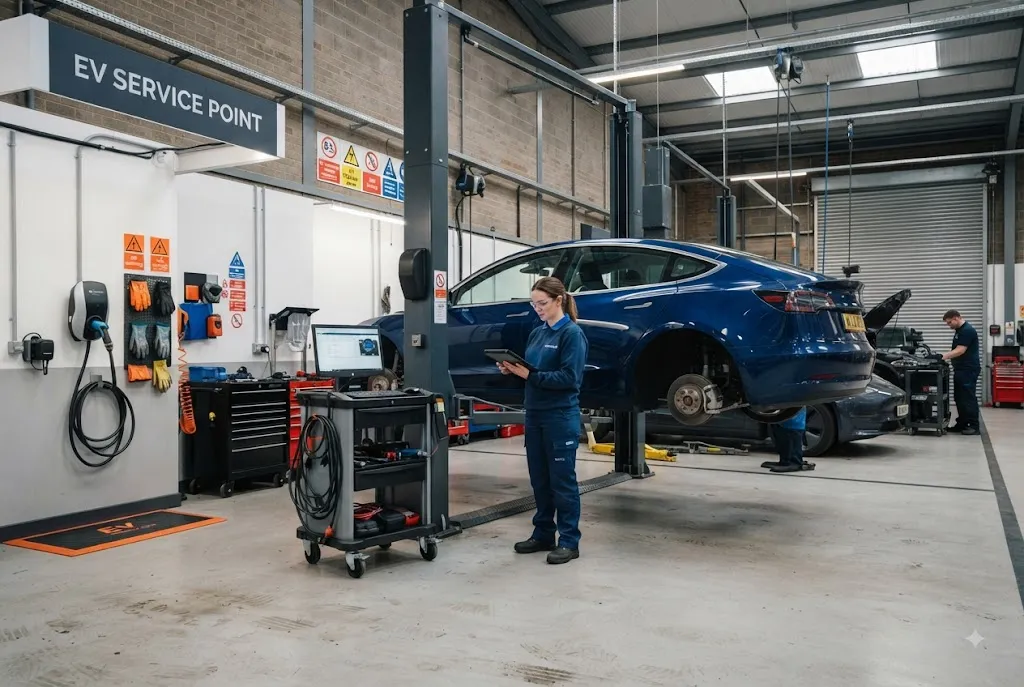
The same operational thinking applies to fully electric vehicles. As networks develop EV servicing capabilities, managers need to consider specialist equipment, technician availability, battery-related work and the effect of longer or less predictable diagnostic jobs on workshop scheduling.
Measuring Performance Across Garage Networks
Multi-site operators can gain additional value from centralised performance measurement. A common reporting structure allows managers to compare branches using the same definitions and identify meaningful variations.
However, central reporting should not become a purely administrative exercise. Branch managers need access to information that helps them make operational decisions during the working week.
A useful dashboard might include workshop utilisation, technician productivity, vehicle turnaround, first-time fix rate, rework, booking capacity and customer satisfaction. Trends are often more useful than isolated daily figures because they reveal persistent operational changes.
From Data to Operational Improvement
Performance measurement only creates value when it leads to action. If a workshop consistently misses its turnaround target, managers need to understand why before changing the target.
The underlying issue might be insufficient technicians, poor scheduling, delayed parts, equipment availability or a high proportion of complex jobs. Each cause requires a different response.
A structured improvement cycle can help:
- Measure current performance.
- Identify the largest operational constraint.
- Investigate the underlying cause.
- Test a targeted process improvement.
- Measure the result.
- Standardise the change if it improves performance without reducing quality.
This approach prevents businesses from making changes based purely on assumptions.
Preparing Workshops for Future Vehicle Technology
Automotive operations will continue to change as vehicle technology becomes more complex. Modern workshops increasingly need to manage conventional combustion vehicles alongside hybrids and EVs.
This creates new requirements for training, diagnostic equipment, workshop procedures and technician scheduling. Businesses that build flexible processes are better positioned to accommodate these changes without disrupting existing services.
Operational planning should also consider specialist services such as wheel alignment. Alignment equipment, technician capability and workshop scheduling can influence both service capacity and customer waiting times.
Building a Culture of Operational Excellence
Technology and dashboards alone cannot create operational excellence. Workshop teams need clear processes, useful information and management support to improve the way work is delivered.
Managers should involve technicians and front-of-house staff when reviewing workflows because employees working directly within the process often understand practical bottlenecks better than anyone else.
Small improvements can have a significant cumulative effect. Better parts preparation, clearer job cards, improved scheduling and stronger final checks can collectively increase workshop performance while maintaining service quality.
Final Thoughts on Automotive Operations
Effective automotive operations provide the foundation for productive, consistent and customer-focused workshops. The strongest approach combines workshop benchmarking, operational KPIs, service quality, productivity measurement and workflow optimisation rather than relying on a single performance indicator.
As vehicle technology continues to evolve, operational processes will become even more important. Workshops that measure performance carefully, understand their bottlenecks and continuously improve their workflows can build greater capacity while protecting repair quality and customer trust.