

A mobile auto service model allows automotive businesses to take servicing, maintenance and selected repairs directly to customers instead of requiring every vehicle to visit a traditional workshop. For customers, this can make vehicle maintenance more convenient. For operators, however, mobile work introduces a different set of operational challenges involving technician scheduling, travel time, equipment, service dispatch and workforce productivity.
Running a successful mobile operation therefore requires more than putting a qualified mechanic in a van. The business needs a structured system for planning appointments, allocating technicians, managing geographic coverage and ensuring that each job has the right tools and parts available. When these processes work together, mobile operations can become more predictable and easier to scale.
What Is a Mobile Auto Service?
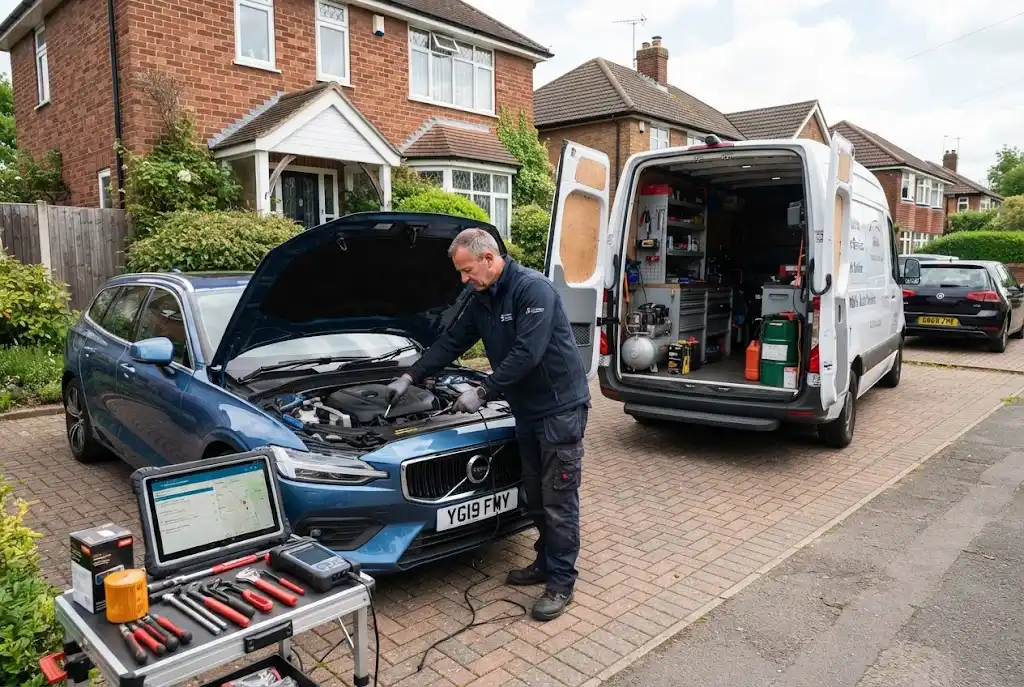
A mobile auto service delivers selected automotive services at a customer’s chosen location, such as their home, workplace or another suitable site. Depending on the business and the equipment available, services can include routine maintenance, diagnostics, brake work, battery-related services and other repairs that can safely be completed away from a fixed workshop.
The AA currently describes its mobile mechanics service as providing scheduled servicing, maintenance and repairs at the customer’s location, including interim, full and major servicing as well as brake repairs and fault finding.
Not every repair is suitable for a mobile environment. Jobs requiring specialist workshop equipment, extensive dismantling or controlled workshop conditions may still need to be completed at a fixed facility. A well-designed service model should therefore clearly define which jobs technicians can complete on-site and which should be referred elsewhere.
How Mobile Auto Service Operations Differ From a Garage
A conventional garage brings vehicles to a central location. Mobile operations reverse that model: the technician, tools and parts travel to the vehicle.
This creates a different operational equation. Technician time is divided between productive work and travelling between appointments. A schedule that looks full on paper may still produce weak productivity if appointments are spread across a large geographic area.
Mobile operators therefore need to consider:
- Travel distance between appointments.
- Expected duration of each job.
- Technician availability and skills.
- Parts and equipment requirements.
- Customer location and access conditions.
- Traffic and realistic travel time.
- Potential delays or additional diagnostic work.
- Time required for job documentation and payment.
These factors make operational planning just as important as technical ability.
Technician Scheduling for Mobile Teams
Technician scheduling should match the right person to the right job at the right time and location. A basic calendar may show when a technician is available, but an effective scheduling process needs to consider skills, estimated job duration, geographic proximity and equipment requirements.
For example, assigning a technician with the appropriate diagnostic experience to a complex fault-finding appointment can reduce the risk of unnecessary follow-up visits. Similarly, grouping appointments within nearby areas can reduce travel between jobs.
Scheduling should also include realistic buffers. If every appointment is booked back-to-back with no allowance for traffic, customer access or unexpected work, even a minor delay can disrupt the remainder of the day’s schedule.
A structured technician scheduling process can therefore improve visibility across the field workforce and make daily planning more predictable.
Why Route Optimisation Matters
Travel is one of the biggest operational differences between a fixed workshop and a mobile service business. Every unnecessary journey consumes technician time without directly producing billable work.
Route optimisation can help businesses organise appointments geographically and reduce avoidable travel. However, the objective should not simply be to create the shortest possible driving route. The schedule must also account for appointment windows, technician capabilities and the expected duration of each job.
A practical approach may involve grouping customers by area during particular periods of the day or week. This can create more predictable travel patterns while giving customers clearer appointment windows.
Build a Reliable Service Dispatch Process
Service dispatch connects customer bookings with field technicians. Without a clear dispatch process, information can become fragmented between phone calls, messaging apps, spreadsheets and paper notes.
A centralised process should give the dispatcher or operations manager visibility of upcoming appointments, technician status, job requirements and customer information. When a job changes, the affected technician should receive the updated information promptly.
This is particularly important when an appointment requires specific parts or equipment. Sending a technician to a location without the required component can create a second visit, increase travel costs and reduce customer satisfaction.
Prepare Technicians for On-Site Servicing
On-site servicing requires technicians to be more self-sufficient than they may be in a traditional workshop. A fixed garage contains a broad range of equipment and parts within easy reach. A mobile technician has to decide what needs to be carried before leaving for the appointment.
Businesses should therefore develop standard equipment and vehicle-stock procedures. Common tools can be organised consistently, while frequently required parts and consumables can be monitored and replenished.
Job information should also be reviewed before departure. Vehicle details, customer concerns, previous work and the planned service can help technicians prepare appropriately.
This preparation becomes especially valuable when mobile operations are connected to a wider automotive operations framework.
Use Digital Job Records
Paper-based records can become difficult to manage when technicians work across different locations. Digital job records provide a central place to document work completed, parts used, recommendations and customer approvals.
They can also support consistent communication between technicians and office staff. If a customer contacts the business after a visit, the team can review the recorded job information rather than relying on someone’s memory.
Where a vehicle requires a broader assessment, digital records can connect with auto inspection services and structured inspection workflows. This makes it easier to distinguish the original customer request from additional findings identified during the visit.
Manage Customer Expectations Before the Visit
Clear communication is particularly important for mobile businesses because the customer may expect every problem to be solved at their location.
Before accepting a booking, the business should explain what the service includes, what the technician will need from the customer and whether there are limitations on the work that can be performed on-site.
Pricing should also be transparent. UK consumer law provides protections for customers purchasing services, including requirements around reasonable care and skill and, where no exact price has been agreed, a reasonable price. The Consumer Rights Act also addresses information provided about services and agreed pricing arrangements.
For mobile businesses, this means quotations, pricing methods, additional charges and service limitations should be communicated clearly rather than left ambiguous.
Connect Mobile Service With Pricing Strategy
Mobile pricing needs to account for the resources involved in delivering a job. The service itself may have a straightforward labour requirement, but the operator also needs to consider travel, equipment, vehicle running costs and the amount of productive time available during the working day.
This is why pricing strategy and field operations should be designed together.
For example, two jobs requiring the same repair may have different operational costs if one customer is five minutes from the technician’s previous appointment and another is located much farther away. The business can use service areas, appointment windows and appropriate pricing rules to manage these differences without creating unnecessary complexity.
Measure Workforce Productivity
Mobile workforce productivity should not be measured simply by counting completed jobs. A technician completing many short appointments may have a different economic contribution from one completing fewer but more complex jobs.
Useful measures can include:
- Billable hours compared with available hours.
- Travel time between appointments.
- Jobs completed per technician.
- First-visit completion rate.
- Average job duration.
- Repeat visits caused by missing parts or equipment.
- Customer cancellations and no-shows.
- Revenue generated per mobile technician.
These measurements can reveal whether problems originate in scheduling, route planning, job preparation or technician capacity.
Support Mobile Operations With Better Garage Management
Although mobile technicians operate away from the main premises, they still need strong management processes. Managers must coordinate people, vehicles, stock, customer communications and financial performance.
Effective garage management principles can therefore be adapted to field operations. The central objective remains the same: provide reliable automotive services while making productive use of people and resources.
Management should regularly review scheduling performance, customer feedback, job profitability and operational bottlenecks. If one technician consistently spends too much time travelling, for example, the solution may be geographic scheduling rather than simply asking that technician to complete more jobs.
Use Inspections to Identify Additional Work
A mobile visit may uncover issues that were not included in the original booking. A structured inspection process helps technicians document these findings clearly and gives customers a better understanding of recommended work.
Photos, notes and standard inspection items can make the information easier to communicate. Customers can then decide whether additional work should be completed immediately, scheduled for another appointment or referred to a suitable workshop.
This approach connects field servicing with broader digital inspections and reporting processes without turning every mobile appointment into an unnecessarily complex procedure.
Improve Mobile Operations Through Continuous Review
A mobile auto service should be treated as an evolving operating system rather than a simple booking model. Managers can review completed jobs each week to identify recurring delays, unnecessary travel, stock problems and scheduling conflicts.
For example, if technicians frequently return to base because a particular part was unavailable, the business can review stock levels or improve pre-job checks. If appointments routinely overrun, standard job durations may need to be adjusted.
These small improvements can form part of a broader workflow improvement programme. Over time, better processes can reduce wasted technician time and improve service efficiency.
When Mobile Auto Service Works Best
Mobile servicing can be particularly useful for routine maintenance, selected repairs, diagnostics and other jobs that can be safely completed at a customer’s location. It can also offer practical convenience to customers who cannot easily leave their vehicle at a garage during normal working hours.
However, the model works best when the business has clear boundaries. Technicians should know which jobs can be completed safely on-site, which require additional equipment and which should be transferred to a fixed workshop.
Clear boundaries protect the customer experience and help prevent technicians from arriving at jobs that cannot realistically be completed with the resources available.
Final Thoughts on Mobile Auto Service
A successful mobile auto service depends on much more than putting technicians on the road. The business needs coordinated scheduling, sensible route planning, reliable dispatch, appropriate equipment and accurate digital job records.
When these elements are connected, mobile operators can make better use of technician time while giving customers a convenient alternative to visiting a traditional garage. The same operational discipline can also support clearer pricing, stronger reporting and more consistent service delivery.
The key is to treat field work as a complete operational workflow. From the moment a customer books an appointment to the technician’s final job report, every stage should have a clear process, responsible owner and measurable outcome.
For businesses considering mobile servicing, the best starting point is therefore not simply adding more appointments. It is designing a field workforce system that balances customer convenience, technician capacity, travel efficiency, service quality and sustainable operational performance.
UK businesses should also make sure their service processes reflect applicable consumer protections. GOV.UK consumer protection guidance provides information about rights relating to services and what customers can do when problems arise.