

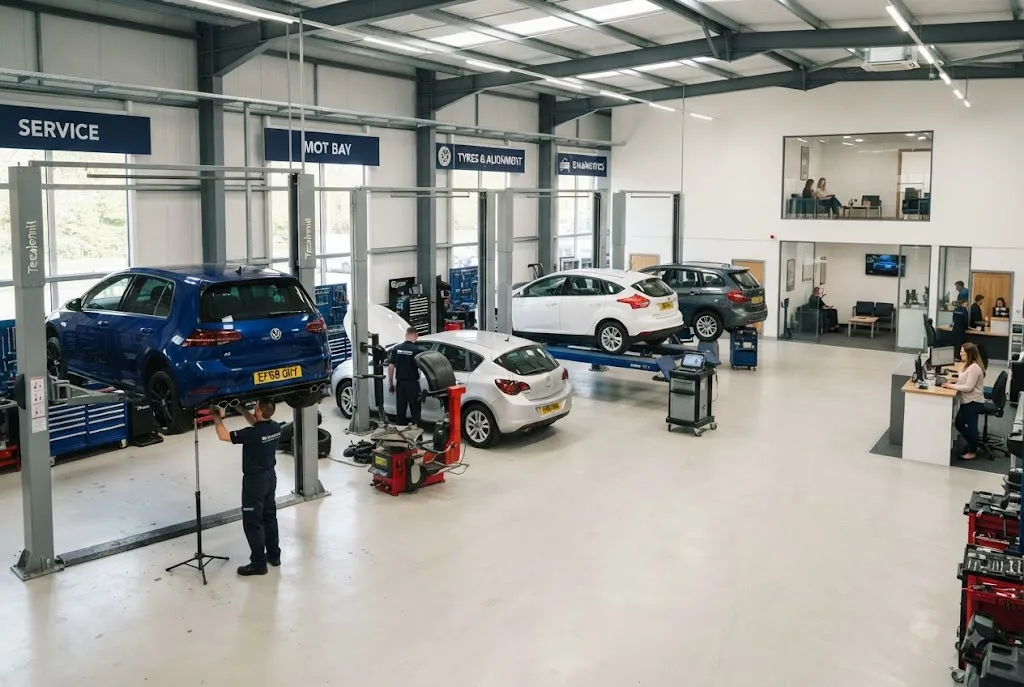
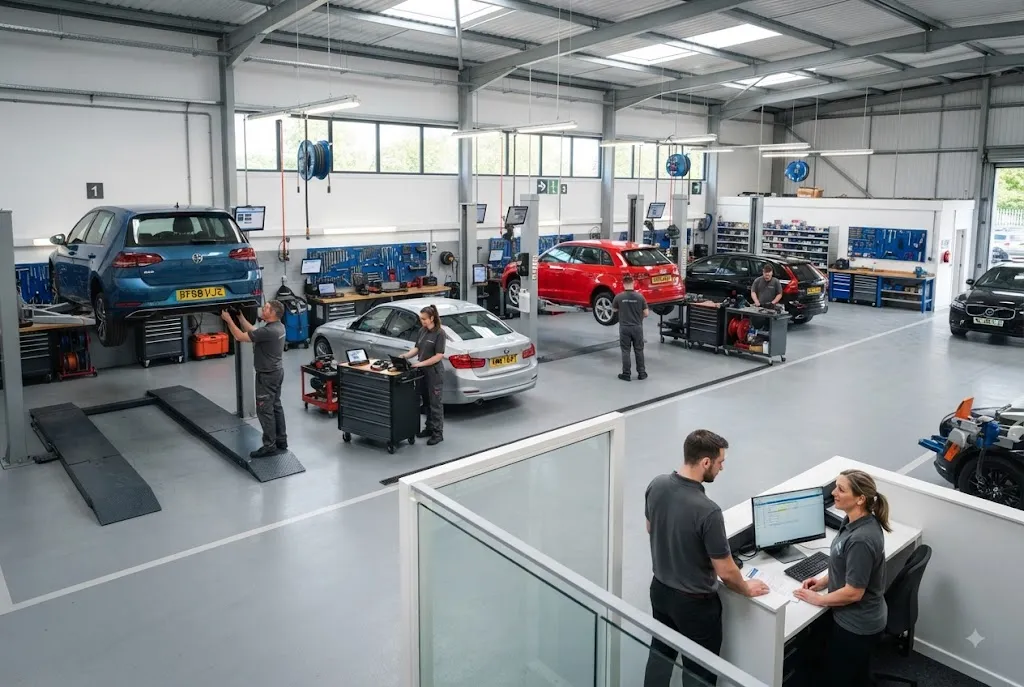
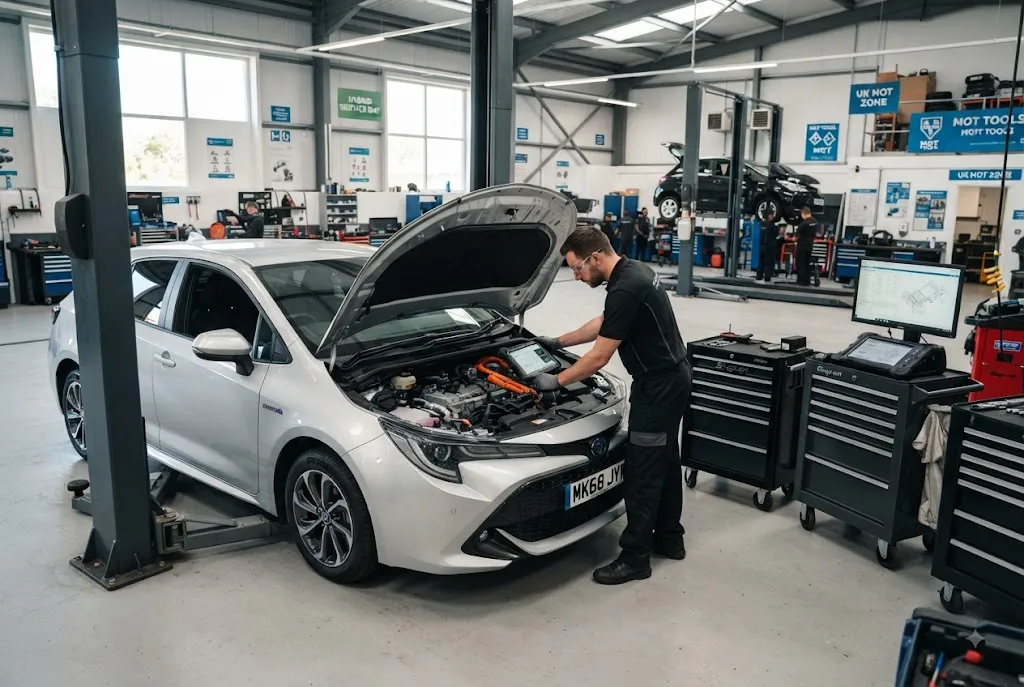
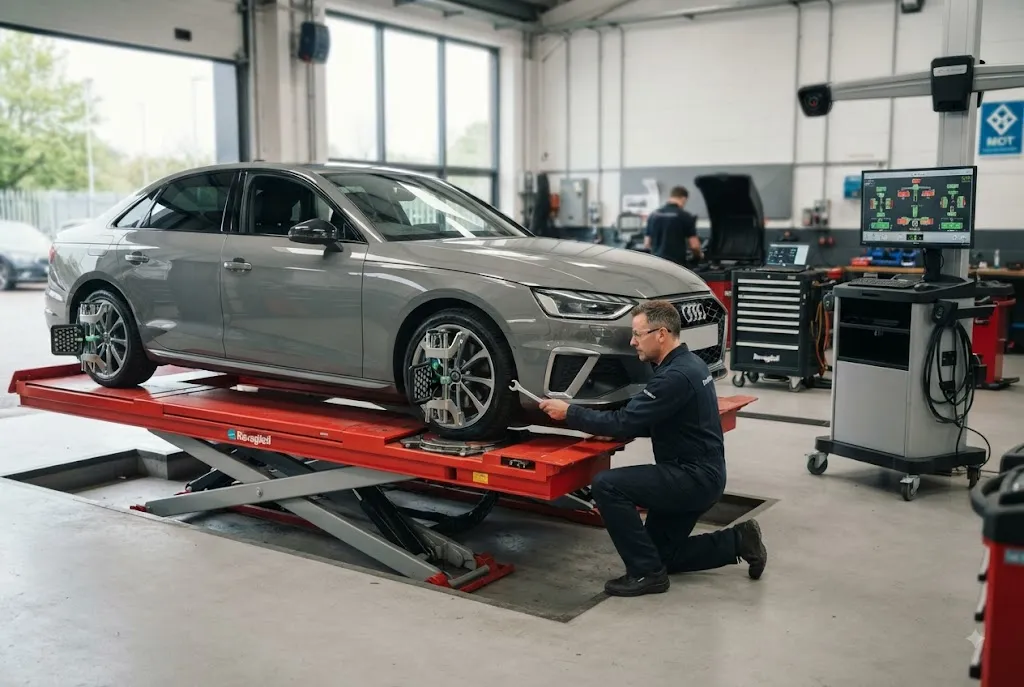
Wheel alignment is an important workshop service that can affect tyre wear, steering behaviour, vehicle handling and overall driving performance. For UK garages, however, alignment is more than a technical adjustment carried out on a vehicle. It is also an operational process involving inspection, equipment, technician time, workshop scheduling, quality checks and customer communication.
A well-managed alignment operation should provide accurate measurements, appropriate adjustments and clear documentation while fitting efficiently into the wider workshop workflow. This becomes particularly important for busy garages handling tyre replacement, servicing, suspension repairs and other maintenance work alongside alignment jobs.
What Is Wheel Alignment?
Wheel alignment involves checking and, where the vehicle design allows, adjusting the geometry of the wheels and steering system so that it conforms to the manufacturer’s specified settings. Depending on the vehicle, relevant geometry can include toe, camber and caster, along with other measurements used by modern alignment systems.
The purpose is not simply to make the wheels appear straight. Alignment geometry affects how the vehicle responds to steering inputs and how the tyres meet the road surface.
Incorrect geometry can contribute to uneven tyre wear, steering concerns or changes in handling. However, alignment symptoms can have multiple causes, so technicians should inspect the wider steering, suspension, tyre and wheel condition rather than automatically assuming alignment is the only problem.
Why Wheel Alignment Matters in UK Workshops
Alignment work sits at the intersection of tyre services, steering systems, suspension maintenance and workshop diagnostics. That makes it a useful service for garages seeking to increase the value of tyre-related jobs while improving vehicle condition checks.
It can also provide an additional diagnostic opportunity. If a customer reports that a vehicle pulls to one side, the steering wheel is not centred or tyres are wearing unevenly, an alignment inspection may help identify whether geometry is contributing to the problem.
However, a professional process should investigate potential mechanical causes before adjustments are made. Worn suspension components, damaged wheels, incorrect tyre pressures or other faults can affect alignment results and may need attention first.
Wheel Alignment and Workshop Inspection
A strong wheel alignment workflow starts with an appropriate vehicle inspection. Before mounting a vehicle on alignment equipment, technicians should establish the customer’s concern and inspect relevant components.
Useful preliminary checks can include tyre condition, tyre pressures, wheel condition, steering components, suspension components and any obvious signs of damage.
This initial inspection helps prevent an alignment machine from being used as a substitute for diagnosis. If a component is worn or damaged, adjusting alignment figures alone may not resolve the underlying issue.
Customer Symptoms
Customer-reported symptoms can provide an important starting point. Common concerns may include uneven tyre wear, a steering wheel that does not appear centred, changes in handling or the vehicle moving away from a straight path.
Technicians should record the customer’s concern accurately and compare it with their own inspection findings.
Tyre Inspection
Tyres should be examined before alignment measurements are interpreted. Uneven wear patterns can provide useful information, while incorrect pressures can influence vehicle behaviour and tyre contact with the road.
If tyres are already significantly worn or damaged, the customer should be informed before alignment work proceeds.
Steering Alignment and Vehicle Geometry
Steering alignment is closely connected with wheel geometry. The steering system, suspension and wheel positions work together to determine how the vehicle behaves when travelling straight or turning.
Modern alignment equipment can measure multiple geometry values and compare them with specified targets. The technician then needs to interpret those measurements and determine whether adjustments are appropriate.
The correct process depends on the vehicle. Not every geometry angle is adjustable on every vehicle, so technicians should use appropriate manufacturer information when deciding what can and should be changed.
Wheel Tracking Explained
Wheel tracking is a term commonly used in the automotive service market to describe alignment-related work, particularly the adjustment of wheel angles to improve tracking and tyre wear.
Although customers may use “tracking” and “alignment” interchangeably, workshops should explain exactly what has been inspected and adjusted. Clear terminology can help customers understand the service rather than assuming that every alignment job involves the same measurements.
Good customer communication should explain whether the workshop has completed a basic check, a full four-wheel alignment or another specific geometry service.
Wheel Balancing vs Wheel Alignment
Wheel balancing and alignment are different services, even though customers may experience symptoms that appear similar.
Balancing addresses the distribution of weight around a wheel and tyre assembly. Alignment, by contrast, concerns vehicle geometry and the relationship between the wheels, steering and suspension.
A vibration at certain speeds may point towards a wheel or tyre balance issue, while uneven tyre wear or steering-related symptoms may warrant an alignment investigation. In practice, technicians should inspect the vehicle rather than diagnose solely from a single symptom.
UK automotive training requirements recognise both wheel balancing and four-wheel alignment as core professional workshop capabilities, alongside diagnostic equipment and other specialist workshop tools.
Modern Wheel Alignment Equipment
Modern alignment operations can use electronic systems to measure wheel geometry and provide technicians with before-and-after readings. The equipment itself, however, is only one part of the process.
Accurate results depend on suitable equipment, correct vehicle positioning, appropriate preparation and proper technician procedures. Equipment must also be maintained and used according to the manufacturer’s instructions.
For MOT testing facilities, GOV.UK guidance includes requirements relating to suitable premises, inspection areas and wheel alignment checking equipment. The guidance also specifies arrangements for checking alignment of relevant equipment and keeping records.
Calibration and Equipment Checks
Alignment equipment is a measurement tool, so its condition and accuracy matter. A workshop should have appropriate procedures for equipment inspection, maintenance and calibration or verification where required.
If measurements cannot be trusted, the workshop cannot confidently demonstrate that an adjustment has produced the intended result.
Vehicle Positioning
The vehicle needs to be positioned correctly before measurements are taken. Technicians should follow the alignment system’s procedures and ensure that the relevant wheels, steering and suspension are in the required condition.
Incorrect preparation can lead to misleading readings and unnecessary adjustments.
Creating an Efficient Alignment Workflow
A well-designed alignment workflow should minimise unnecessary movement while maintaining measurement accuracy.
A practical process can include:
- Record the customer’s concern.
- Inspect tyres, wheels, steering and suspension.
- Confirm that alignment work is appropriate.
- Check vehicle-specific alignment specifications.
- Prepare and position the vehicle.
- Take initial alignment measurements.
- Identify measurements outside the appropriate range.
- Complete permitted adjustments.
- Recheck the measurements.
- Carry out final quality checks and document the result.
This structure gives technicians a repeatable process while providing managers with clear points at which performance can be measured.
Wheel Alignment and Workshop Scheduling
Workshop scheduling has a direct effect on alignment capacity. Alignment equipment can become a bottleneck when several jobs require the same bay or technician at the same time.
Managers should therefore consider alignment capacity when building the daily workshop schedule. A tyre replacement may be relatively predictable, while an alignment job involving worn suspension components can require additional inspection and repair time.
Booking systems can capture the reason for the visit so that the workshop knows when specialist equipment and technician time are likely to be required.
Managing Alignment Bay Capacity
If a workshop has only one alignment bay, inefficient scheduling can quickly create delays. Managers can monitor booking utilisation and identify periods when the equipment is underused or overloaded.
Where demand is consistent, the business can evaluate whether changes to technician allocation, operating hours or equipment capacity would improve throughput.
Combining Alignment with Tyre Work
Alignment can often form part of a broader tyre service workflow. When new tyres are being fitted, technicians can inspect tread wear and identify whether geometry may have contributed to uneven wear.
However, alignment should be recommended based on inspection findings rather than automatically added to every tyre transaction.
Alignment Operations and Technician Productivity
Alignment operations require a balance between speed and accuracy. Completing more jobs is not useful if measurements are unreliable or vehicles require repeat work.
Workshops can monitor productivity using measures such as alignment jobs completed, average job time, equipment utilisation, repeat alignment work and technician hours.
These figures should be interpreted alongside quality indicators. A technician completing fewer jobs may be handling more complex vehicles or spending additional time identifying an underlying suspension issue.
Quality Control After Alignment
Quality control should be part of every alignment workflow. After adjustments are completed, the technician should verify the results and confirm that the vehicle meets the applicable specifications.
Before-and-after alignment reports can provide useful documentation for both the workshop and customer. They can show what was measured and whether adjustments changed the relevant values.
A final inspection should also confirm that components and wheel fasteners have been handled correctly and that the vehicle is ready for customer handover.
Common Wheel Alignment Problems
Uneven Tyre Wear
Uneven tyre wear can be associated with alignment issues, although it can also result from tyre pressure, suspension condition, driving patterns or other factors.
Technicians should inspect the full picture before recommending an alignment adjustment.
Vehicle Pulling
A vehicle moving away from a straight path can have several possible causes. Alignment is one possibility, but tyre condition, road surface and mechanical components can also influence behaviour.
A structured inspection is therefore more reliable than assuming the symptom has a single cause.
Off-Centre Steering Wheel
An off-centre steering wheel may indicate a geometry issue, but it can also be associated with steering or suspension work that has previously been completed.
Technicians should investigate the vehicle and follow the appropriate manufacturer information before making adjustments.
Repeated Alignment Requirements
If a vehicle repeatedly requires alignment correction, the workshop should investigate why. Repeated adjustment may indicate worn components, impact damage or another underlying problem.
Simply repeating the same alignment procedure without identifying the cause can lead to poor customer outcomes.
Wheel Alignment for Electric and Hybrid Vehicles
Wheel alignment remains relevant as the UK vehicle parc becomes increasingly electrified. Electric and hybrid vehicles still use tyres, steering systems and suspension components that require appropriate inspection and maintenance.
However, technicians should consider vehicle-specific requirements, particularly where vehicle weight, tyre specification or suspension design differs from conventional models.
This creates a useful connection between alignment operations and broader EV servicing. Workshops developing EV capability should ensure that conventional wheel and tyre services remain integrated into their new workflows.
The same principle applies to hybrid servicing. Hybrid vehicles require specialist procedures in some areas, but tyre, steering and suspension inspections remain important elements of overall vehicle maintenance.
Connecting Alignment with Automotive Operations
Alignment performance should not be managed separately from wider automotive operations. Workshop managers can treat alignment as one part of the overall vehicle service journey.
For example, a customer may arrive for a routine service and the inspection may identify uneven tyre wear. The workshop can then determine whether further investigation is appropriate. This creates an opportunity to connect inspection, diagnosis, scheduling and repair within one coherent process.
When these workflows are connected, managers can measure the complete customer journey rather than looking at alignment as an isolated service.
Benchmarking Alignment Performance
Multi-site businesses can use alignment data to compare branches and identify operational differences. Useful indicators may include alignment jobs per technician, average turnaround time, equipment utilisation, repeat work and customer satisfaction.
However, benchmarks should reflect the service mix at each location. A branch that performs complex suspension-related alignments should not necessarily be compared directly with a high-volume tyre centre handling mostly straightforward alignment jobs.
This is consistent with the wider principle of garage chain benchmarking, where performance comparisons are most useful when differences in operating models and local conditions are considered.
How to Improve Alignment Operations
Workshops looking to improve alignment performance can start with a straightforward operational review.
- Measure alignment demand by day and time.
- Track average alignment job duration.
- Monitor alignment equipment utilisation.
- Record repeat or comeback work.
- Review technician allocation.
- Check equipment maintenance and accuracy procedures.
- Identify common causes of alignment delays.
- Improve communication between reception and technicians.
The objective should be to remove genuine bottlenecks rather than simply increase the number of jobs completed.
Customer Communication About Alignment
Alignment can be difficult for customers to understand because the relevant measurements are technical. Clear communication therefore adds significant value.
Rather than presenting customers with unexplained numbers, service advisors can explain the practical finding. For example, they can describe uneven tyre wear, explain that the alignment measurements require attention and outline the recommended next step.
Before-and-after reports can support this conversation by showing the measurements recorded during the service.
When Alignment Should Be Investigated
There is no single symptom that proves alignment is incorrect. An investigation may be appropriate when a customer reports steering or handling changes, when tyre wear appears unusual or when suspension or steering work has been completed.
Alignment can also be considered after an impact or repair where wheel geometry may have been affected.
The important point is to diagnose the vehicle rather than treat alignment as an automatic solution to every tyre or steering complaint.
Building a Consistent Wheel Alignment Service
A professional wheel alignment service depends on accurate equipment, trained technicians, appropriate vehicle information and a repeatable workflow.
From the first customer conversation through final measurement, every stage should support the same objective: identifying the actual condition of the vehicle and carrying out appropriate work accurately.
For larger workshops and garage networks, standardising these procedures can also improve benchmarking. When every branch records jobs, turnaround, quality outcomes and equipment utilisation consistently, management gains a clearer picture of network performance.
Final Thoughts on Wheel Alignment
Wheel alignment is both a technical vehicle service and an important workshop operation. Accurate geometry measurements can help technicians address relevant steering, tyre and handling concerns, while an efficient workflow allows garages to integrate alignment work into wider servicing and repair activity.
The strongest approach combines proper inspection, suitable equipment, manufacturer-specific information, trained technicians, effective scheduling and final quality checks. By measuring alignment performance alongside broader workshop KPIs, UK garages can improve operational efficiency without sacrificing accuracy or customer service.
As vehicles become more technologically advanced, alignment will remain an important part of maintaining tyres, steering and suspension. Workshops that treat the service as a structured operational process will be better positioned to deliver consistent results across an increasingly diverse vehicle market.